

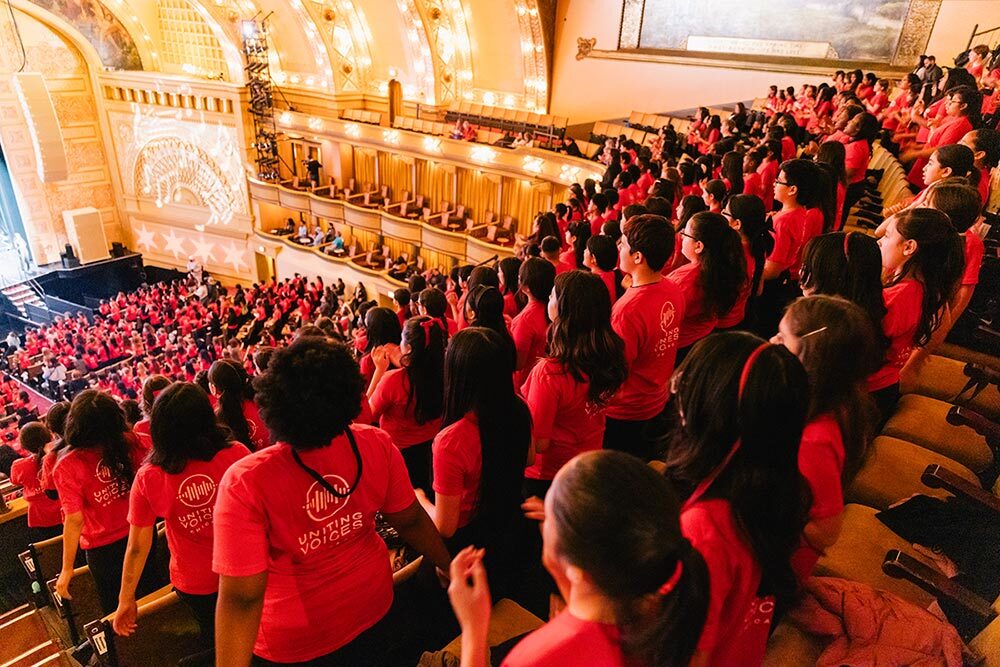
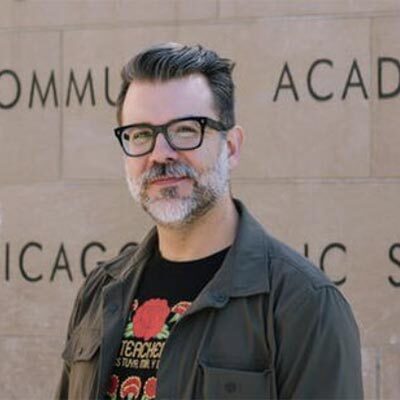
Every March, the National Association for Music Education celebrates Music In Our Schools Month to raise awareness of the importance of music education for all young people. As an organization dedicated to music education and youth empowerment programs, and making those programs accessible to all who want it, this month provides another platform to share the work we do. To celebrate this month, we interviewed Charles Koltak, one of our music liaisons at Orozco Academy, one of the 80+ schools in Chicago that we serve. Mr. Koltak has taught General Music at Orozco Academy since 2018, and, before that, spent a decade as a third and fifth grade teacher in CPS. When not teaching, Mr. Koltak is an active performing musician, music producer and father of three busy and talented boys.
We caught up with Mr. Koltak to talk about the importance of music education access in schools, our recent Black History Concert Series performances, and how choral music education teaches young people lessons about being a citizen in a democratic society.
Uniting Voices Chicago: How long have you been a music educator? How long have you collaborated with Uniting Voices Chicago?
Charles Koltak: I have been teaching in Chicago Public Schools since 2010. I started as a third grade teacher, but, in 2018, I made the decision to teach music. This is the third year of our collaboration with Uniting Voices Chicago.
UVC: March is #MusicInOurSchoolsMonth. Why is it important for young people to have access to music education at their school?
CK: A music education helps students develop parts of their personalities that other disciplines don’t access. Music activities also require students to be creative communicators and problem solvers in unique ways that stretch their skills and open up new growth paths. Music is a social activity that creates strong bonds and unifying experiences.
UVC: What is something unique about choral music education that sets it apart from other "genres" of arts education?
CK: Children often develop a belief that music is not for them, or that they can’t sing. Choral music invites students to get in touch with their voice, which is unique to each of us, and connect with the joyful experiences of contributing our voices to a collective work. This, I think, is a crucial lesson about being a citizen in a democratic society.
UVC: Tell us about your recent experience attending the Black History Concert Series.
CK: I was so pleased with the experience this year. The venue was beautiful and the logistics were fluid and easy. The presentation was really well conceived and delivered. My students were engaged throughout the event and came away, as usual, inspired to go out and make some more music. They also came away from the event motivated to recruit friends into the choir.
UVC: Anything else you'd like our audiences to know?
CK: It is always a pleasure to interact with the people at Uniting Voices Chicago. I’ve never walked away from an exchange with a staff member without feeling heard and supported. The organization attracts and retains talented and compassionate individuals that elevate Uniting Voices’ agenda. Drew [Smith, School Program Director] is the best, and Ms. Heather [Stewart, conductor at Orozco Academy] rules.